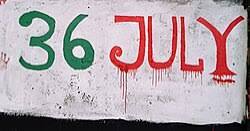
When there is a major movement in politics, the biggest fight is over the “story” or narrative of the movement. Who interprets this movement and how it is interpreted determines the sharing of power in the future. The July Uprising originally started as a student quota reform movement, which later turned into a mass movement with the participation of people from all over the country and led to the fall of the Sheikh Hasina government.

If this is called a “spontaneous uprising of the students and the people” or a “revolution of Generation Z”, then there is an opportunity for the formation of a new leadership, a new organization or even a new political alliance. BNP does not want others to put aside their long history of opposition of 15-16 years and adopt a new “revolutionary” identity.
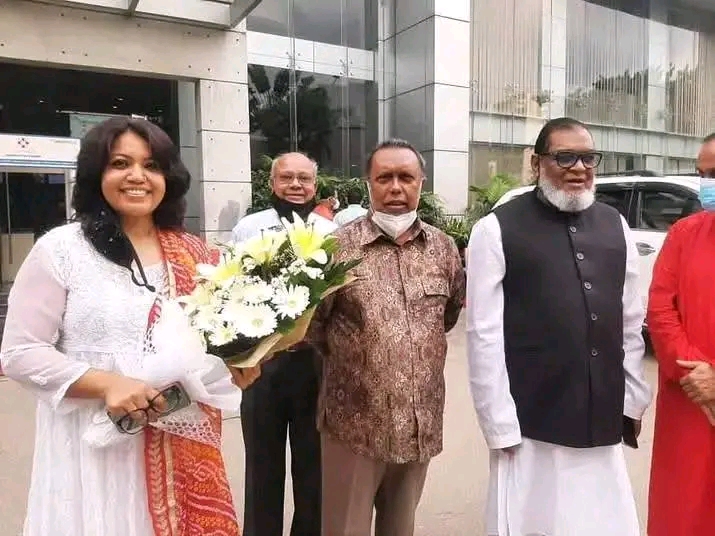
Therefore, many leaders, including Nilufar Chowdhury Moni, say, “This did not come suddenly, it is part of our old struggle.” This is actually narrative control, where the BNP leaders aim to establish BNP as the “main force” in history. The party that can establish itself as a “partner” or “main driving force” of this movement to fill the big void that is created after all the coups will be ahead in electoral politics, public support, and international recognition in the future.

BNP wants the July coup to be seen as part of their “fight to restore democracy,” so that the pressure of the “July Charter” or other reforms can be reduced or taken as their own. Another aspect of this is the politics within the BNP party. Senior leaders, such as Nilufar Chowdhury Moni, want to protect the party’s tradition, organizational structure, and their own position.
On the other hand, Chhatra Dal and Jubo Dal, who know the reality on the ground better, have seen how the students were the first to take to the streets in July. So when the senior leader says “planned,” Chhatra Dal protests. This is a generational conflict within the same party.
In addition to the narrative propaganda of political parties, we need to understand the framing theory of social movements. Framing means how an event is interpreted, who is blamed, what solutions are shown, and how people are motivated to act. Activists create this “frame” so that people can easily understand and join in.
The BNP had created a powerful master frame for years—the Awami League’s rule meant dictatorship, vote-rigging, and repression. They used to say that the solution to escape from this was a neutral caretaker government and fair elections. In the July coup, they tried to link this old frame to the new event.
AaaaaaaaThey said that it did not come suddenly, it was a continuation of their long struggle. Some said “planned” again, so that it did not seem like a completely spontaneous movement of students. It was basically an attempt at frame alignment—an attempt to maintain their relevance by linking new successful events to their old stories.

But the student movement created the frame in a completely different way. They started with a specific demand for quota reform. Then they quickly turned this demand into a demand for Hasina’s downfall. After Hasina’s “grandchildren of kings” comment, they turned it around—it’s not just a demand for jobs, it’s a fight for national honor and the future of the youth. They created a motivational frame—“We will give our lives and blood for the future of the country.”
This framing spread very quickly, because it was emotional, moral, and generational.
Digital activism played a big role in the movement. Students quickly spread the frame using Facebook, TikTok, Instagram, and Telegram.
They stirred people’s emotions with live streaming, short videos, memes, and personal stories. Even when the Hasina government shut down the internet, they continued using VPNs. This digital strategy made their frame spread very quickly and widely.
On the other hand, BNP’s digital strategy was their traditional one. During July, they expressed support, highlighting the martyrdom of their workers. But their content was more formal and political. Unlike the students, they were not as emotional and viral as they were, but rather they tried to establish their own demands during the post-uprising period.
The BNP applied the framing theory in a long-term and stable manner. They preserved the master frame and linked new events to it. But the students quickly created new frames that were emotional and ingrained in the minds of the youth. The BNP’s digital framing was organized and consistent, but less vibrant. Whereas the students’ was decentralized, authentic and viral.
The most powerful of the students’ digital framing tactics was their handling of the “Razakar” comment. After Hasina’s comment went viral, they reversed it within minutes. With video clips, memes and posts, they said, “Who are you, who am I, Razakar, Razakar.” By doing this, they countered the traditional shaming of the Hasina era; making it clear that the Hasina government was rather disrespectful to the youth and the history of independence. This counter-framing quickly made the movement bigger.
Added to this was the narrative building of the martyrs.
The students have spread the names, pictures and stories of the deceased. They say that they gave their lives for the future. This has given the movement moral height and made the people stronger. They have presented each death as proof of the government’s cruelty.
The ability to create a frame is very important in politics. The party or group that can create a frame in line with the emotions and beliefs of the people can gain a place in the hearts of the people. The students showed that ability in the July coup, not the BNP or other political parties. In the future, the party that can create a long-term
BNP applied the framing theory in a long-term and stable manner. They preserved the master frame and linked new events to it. But the students quickly created new frames that were emotional and ingrained in the minds of the youth. BNP’s digital framing was organized and consistent, but less vibrant. Whereas the students’ was decentralized, authentic and viral.
The most powerful of the students’ digital framing tactics was their handling of the “Razakar” comment. They reversed it within minutes after Hasina’s comment went viral. They used video clips, memes and posts to say, “Who are you and who am I, Razakar, Razakar.” By doing so, they countered the traditional shaming of the Hasina era; making it clear that the Hasina government was rather disrespectful to the youth and the history of independence. This counter-framing quickly made the movement bigger.
Added to this was the narrative building of the martyrs. The students spread the names, pictures and stories of the deceased. They said that they gave their lives for the future. It gave moral height to the movement and made people stronger. They have presented every death as evidence of the government’s cruelty.
The ability to create frames is very important in politics. The party or group that can create frames in line with people’s emotions and beliefs can win a place in the hearts of the people. The students showed that ability in the July coup, not the BNP or other political parties. In the future, the party that can balance long-term continuity with creating quick emotional frames will be stronger.
It is important to remember that in this digital age, history is ultimately being written with people’s memories, videos, documents and research.
The July coup was a courageous step by students and turned into the participation of ordinary people across the country—which is difficult to deny. If all the old political parties, including the BNP, respect the true spirit of this coup and move towards democratic reform and accountability, then perhaps they will be more powerful and acceptable. And if they want to impose a narrative saying only “we did it” or “planned it”, it will be a betrayal of people’s memories, which will increase their distance from the people.
Politics ultimately belongs to the people. Those who took to the streets in July, shed blood, and those who still dream of a just Bangladesh—they will create the Bangladesh of the future.