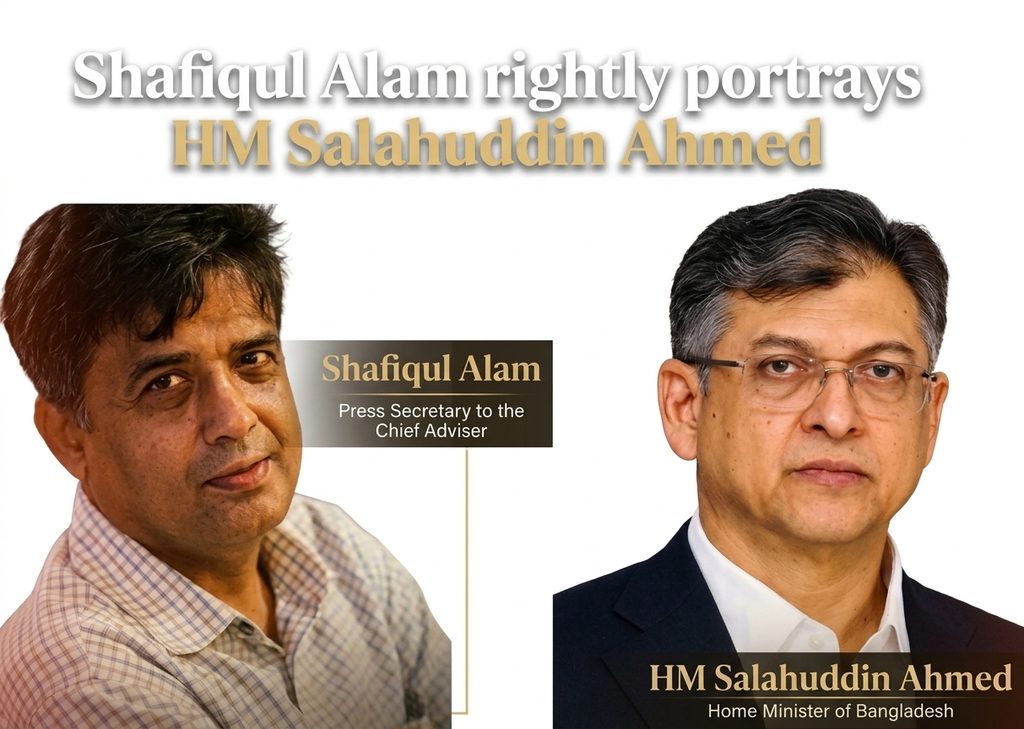
Prominent “Daily Wadaa” Editor & former Press Secretary to the Interim government, Shafiqul Alam who turned into a towering iconic figure of post-July revolution based narrative manufacturing for the legacy of sacrifices made by thousands for last 17 years . Alam has singlehandedly defended Dr Yunus led interim government, whereas, he has also articulated soothing write ups, debunking fascist fallen regime’s beneficiaries and people in media industry still attempting to justify ruthless dictatorship of fled Psychopaths. Some have demonstrated that in this fight against psychopaths, Shafiqul Alam has been a lonely sherpa all the way up to this day, indeed, the opposite is true. Shafiqul Alam has given birth to millions of his followers in home & abroad with his stunning Dhaka Diary’s plain English with real life hustle & bustles of capital . He has also been branded as the Journalist who has revolutionized this whole English media industry in Bangladesh since ’71 topping the industry reaching highest readers.
Shafiqul Alam has written on social media post a landmarking piece on existing law & order related aspect and Home minister’s unfallacious shot. This time, his write up on Home minister Salahuddin Ahmed’s tactics to strategically neutralise medival, hawkish moves which in Bengali much nicely articulated as “Paye para diye Jogra” ( Hackling someone just to get outraged), has been highly appreciated from all corners of July revolution loving people.
“There was no doubt that Salahuddin Ahmed’s extremely thoughtful calculated strategy—refraining from preemptive action against the Awami League—raised many eyebrows. Yet it worked perfectly according to plan. Machete-wielding AL activists torched the homes of BNP MPs and dozens of others, burned police stations, and stopped bus passengers wearing skullcaps or sporting beards to check their political allegiances.
True, the optics were grim, signaling government weakness and an AL comeback. But it was a trap, and AL took the bait.
After five deaths, numerous burned buses, and hit-and-run Molotov cocktail and petrol bomb attacks, all AL gained was sympathetic coverage in the Indian press. Their premature push squandered whatever momentum they were building for the planned return of their disgraced leader.
The government barely had to lift a finger. Violence never truly spread beyond the greater Gopalganj belt, and even the killing of five people by suspected AL activists failed to escalate tensions. Once the dust settled, Salahuddin quietly dispatched the chiefs of the three forces to the heart of Gopalganj. Before security forces could even launch a full-scale operation, reports emerged that young AL activists had already fled to other districts.
To safeguard further against AL, BNP chief Tarique Rahman called on the opposition to forge a broader unity—a masterstroke for which AL and its backers were unprepared. The Jamaat chief was quick to welcome the move, holding a one-to-one meeting with the prime minister. The very next day, Jamaat and its allies announced a 40-day program to confront their opponents.
AL and its commentators will claim this political alignment was merely a reaction to an AL resurgence, but what the parties in parliament actually accomplished was projecting a sense of unity that had been missing since the election. That unity leaves AL with little room to maneuver: either escalate violence or face deeper political irrelevance.
In effect, AL has walked into an escalation trap. If it wants to force the government and the opposition into a settlement, its only option now is to raise the threshold of violence, something its history makes all too easy.
Yet more killings and surprise hit-and-run attacks would only isolate the party further from the public, while high-casualty attacks risk triggering a severe backlash or mob reprisals. AL is not a guerrilla outfit, and it cannot afford an escalation trap. The sooner its fugitive leadership realizes this, the better it will be for its activists on the ground.
Time is running out fast. Essentially, AL has until Ramadan to claw its way back into national reckoning, and its leader must plot a path home by then if she hopes to return. The BNP government will not take her back unless she is extradited—and as Sreeradha Datta has noted, India will never extradite her. BJP can’t afford a political crisis stemming from the extradition of the Indians” most beloved foreign dictator!!
After Ramadan comes the monsoon, leaving India little choice but to reassess its posture toward Hasina and the senior AL leaders holed up in Kolkata. They are likely to be quietly urged to seek refuge in the West, preferably the UK. Hasina will find both Western and Indian media losing interest in her familiar narrative, and she may even be asked to keep quiet—a signal to Dhaka that New Delhi is ready for an official visit by Tarique Rahman.
As for Dr. Shafiqur Rahman, a semi-official visit to New Delhi by Bangladesh’s leader of the opposition could well materialize sometime in 2029.”
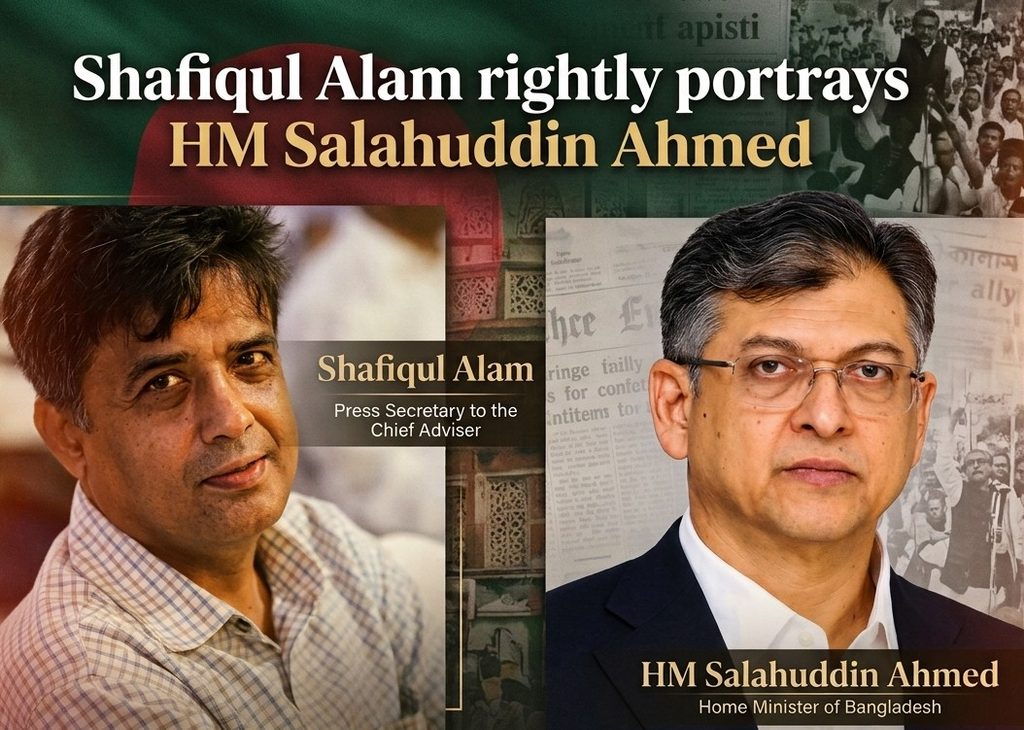
This post has already gone extremely “viral” on popular among people of all corners when Home minister Salahuddin Ahmed is being unfairly dehumanized and confronting worst Media campaign by fascists as so-called “BCL” in Chittagong College, infact, Salahuddin Ahmed father being a prominent Islamic scholar, has never shown or demonstrated his any Associations in College life which has been verified by Prof Dr Ahsanul Alam, senior most Professor of Marketing dept of University of Chittagong and former Professor at National defence College who was at Chittagong College with him. This has been now evident that Home minister’s strategy has been applauded by even former spokesman of the Interim government and it is hoped the fascists in this media war, will fail miserably.
Author of this write up Ahmed Saikat is executive editor of daily Bangladesh first.