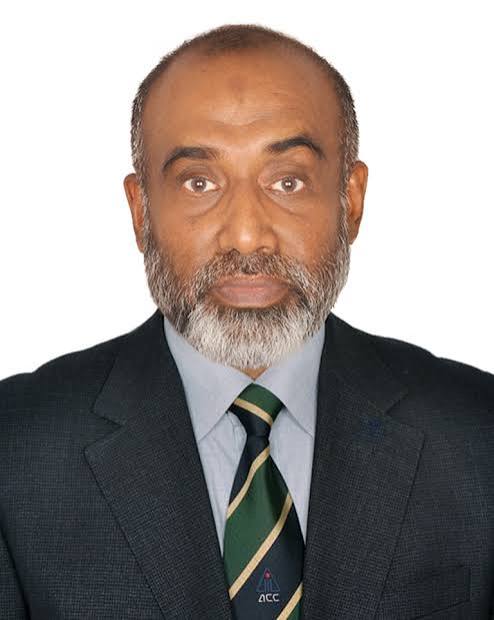
Brigadier General Md Nasimul Gani, PhD, MWS, MDS, afwc, psc (Retd.)
30 August 2026
Prelude
Following the signing of the Mecca Defence Pact by Saudi Arabia, Türkiye and Pakistan on 7 August 2026, extensive discussions have emerged in Bangladesh and around the world regarding its possible geopolitical and strategic implications. In a rapidly changing geopolitical environment spanning South Asia, the Middle East and the wider Muslim world, Bangladesh now faces an important strategic question: What path should we choose, and how can we best protect our national interests, independence and sovereignty?
After the Second World War, the rise of the United States as the leading global superpower, replacing Britain, gave rise to a new architecture of alliances, security arrangements and spheres of influence. The Baghdad Pact, CENTO and SEATO were important historical examples. Yet these alliances did not ultimately create durable regional unity and self-reliance; in many cases, conflicting national interests, mistrust and historical ruptures deepened further.
Francis Fukuyama’s The End of History and the Last Man (1992), Samuel P. Huntington’s The Clash of Civilizations and the Remaking of World Order (1996), and Zbigniew Brzezinski’s The Grand Chessboard (1997) provide three important intellectual reference points for understanding the post-Cold War world order, civilizational divisions and global geopolitical strategy. The continuing US-Israel confrontation with Iran also demonstrates that the existing security architecture of the Middle East is being reshaped by new realities.
In this context, the Mecca Defence Pact should not be viewed merely as a military alliance. The deeper question is whether the Muslim world will seek security primarily through new military blocs, or through mutual trust, fraternity, conflict resolution, economic strength, education, science, technology and indigenous productive capacity. A broader and more inclusive regional security framework that also accommodates Iran could make this discussion more meaningful.
In the twenty-first century, national security is no longer limited to military security. Education, technology, economic strength, food and energy security, health, cyber capability, human resources, productive capacity and social stability are all integral components of national power. The knowledge, technology, investment and experience of the Muslim world could significantly assist Bangladesh in strengthening its relatively weaker non-traditional security sectors.
Bangladesh already has deep human, religious, historical, labour-market and people-to-people relations with Saudi Arabia, Türkiye and Pakistan. Therefore, rather than focusing primarily on a new military arrangement, Bangladesh could derive greater benefit by transforming these existing relationships into effective partnerships in investment, trade, education, technology, skilled human resources, energy, industry and production.
The experiences of 1971 and 2024 demonstrate that the people of Bangladesh are prepared to make the highest sacrifices to protect national interests and sovereignty. Therefore, Bangladesh’s principal strength must come from national unity, democratic institutions, education, human resources, economic capacity, technology, productive capability and the inherent strength of its people—not from excessive dependence on any great power or military alliance.
Bangladesh should not rush to join any new military bloc. Instead, it should take an active role in strengthening the independent influence, effectiveness and strategic position of SAARC and BRICS, while deepening institutional and practical cooperation with ASEAN. At the same time, Bangladesh should become more deeply connected with the economic and technological capabilities of Saudi Arabia, Türkiye, Pakistan and the wider Muslim world.
However, such a decision could have long-term consequences for Bangladesh and may represent a turning point or historical rupture in the continuity of our 55-year foreign and defence policy. Therefore, the issue should not be treated merely as a matter of executive decision-making. If and when necessary, it should be considered through public opinion, national consensus and appropriate deliberation in the Jatiya Sangsad, the National Parliament of Bangladesh.
Whatever decision is ultimately taken, it must be based on the interests of the people of Bangladesh, our independence, sovereignty and the security of future generations. The objective should not simply be to become a member of another military bloc; it should be to build a self-reliant, prosperous, technologically capable and sovereign Bangladesh—standing on its own strength and cooperating with all on the basis of mutual respect and equality.
Brigadier General Md Nasimul Gani, PhD, MWS, MDS, afwc, psc (Retd.)
30 August 2026