Salahuddin Ahmed and the Pursuit of a Safer Bangladesh: Leadership, Accountability and the Fight Against Crime
Ensuring public safety, restoring citizens’ confidence in law enforcement and building a society free from fear are among the most important responsibilities of any government. In Bangladesh, Home Minister Salahuddin Ahmed faces the challenging task of strengthening law and order while responding to public expectations for justice, accountability and effective policing.
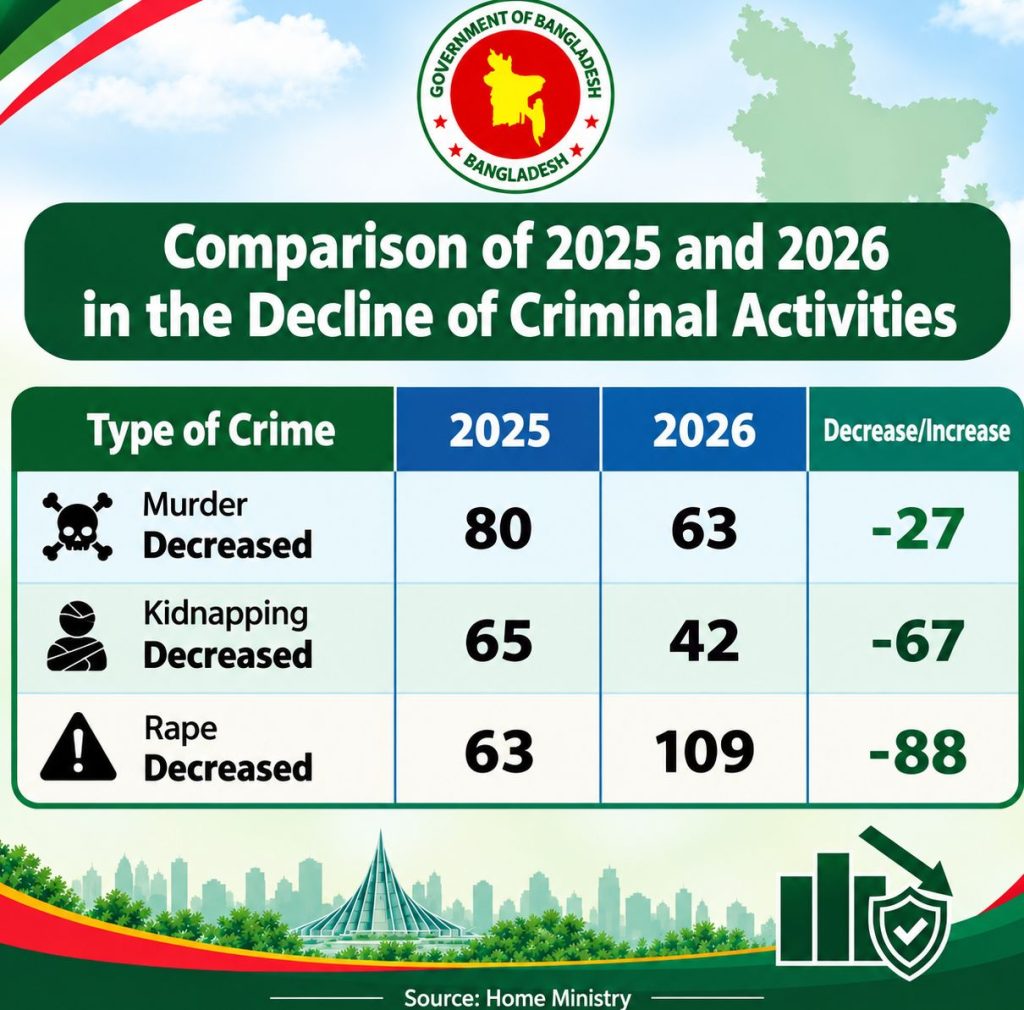
The statistics presented in an infographic comparing criminal activities in 2025 and 2026 have brought renewed attention to the country’s crime situation. The figures highlight the importance of closely monitoring murder, kidnapping and rape, three serious crimes that deeply affect individuals, families and communities. They also provide an opportunity to discuss the leadership and responsibilities of the Home Ministry under Salahuddin Ahmed.
Leadership Through Responsibility
The Home Minister’s portfolio carries enormous responsibility. Citizens expect more than announcements and official statements; they want visible improvements in their everyday lives. They want to travel safely, protect their families, trust the police and receive justice without discrimination or unnecessary delay.
Salahuddin Ahmed’s leadership can be appreciated in this context of public expectations. The challenge before him is to translate the government’s commitments into measurable improvements in public security. Effective leadership requires coordination among police, intelligence agencies, prosecutors, local administrations and other relevant institutions.
A professional, accountable and responsive law-enforcement system is essential for achieving these objectives. Officers must be equipped to prevent crime, investigate allegations impartially and ensure that evidence-based investigations lead to justice.
A Data-Driven Approach to Crime Prevention
The infographic presents comparative figures for murder, kidnapping and rape. While its figures require clarification and verification before definitive conclusions can be drawn, the comparison highlights the need for transparent crime reporting.
For example, the graphic lists murders declining from 80 in 2025 to 63 in 2026, and kidnappings falling from 65 to 42. However, its stated changes do not match the differences between those figures. It also lists rape cases increasing from 63 to 109, despite describing the trend as a decrease.
Such inconsistencies make accurate official reporting especially important. The Home Ministry can strengthen public confidence by publishing verified statistics, clearly identifying reporting periods and explaining changes in recorded crime. Reliable data would help policymakers identify emerging threats, direct resources effectively and assess the results of crime-prevention initiatives.
Protecting the Vulnerable
A particularly important measure of successful leadership is how effectively the authorities protect vulnerable people. Women, children, older citizens and economically disadvantaged communities deserve equal protection under the law.
Preventing sexual violence requires survivor-centred support, sensitive investigations, protection from intimidation and timely judicial proceedings. Combating kidnapping requires coordinated investigations, rapid responses to complaints and support for affected families. Preventing murder demands attention to criminal networks, illegal weapons, unresolved disputes and other contributing factors.
These challenges require sustained action rather than temporary campaigns.
Building Public Trust
Appreciating Salahuddin Ahmed should also mean encouraging him to pursue reforms that produce lasting results. Public trust grows when law enforcement operates professionally, corruption is addressed, political or personal influence does not obstruct justice, and allegations of wrongdoing are investigated fairly.
The Home Ministry has an opportunity to strengthen institutional discipline, modernise policing and improve communication with citizens. Independent oversight, transparent reporting and constructive engagement with civil society can further reinforce accountability.
A Safer Future
Ultimately, the success of Salahuddin Ahmed’s tenure will be measured not by slogans or individual statistics, but by whether ordinary Bangladeshis feel safer and receive equal protection under the law.
A Bangladesh where families live without fear, victims find justice and criminals face lawful consequences is a goal worthy of national commitment. By prioritising transparency, professional policing and measurable results, the Home Minister can contribute meaningfully to that vision.
The greatest achievement of any Home Minister is not merely a decline in reported crime, but the creation of a society where justice is dependable, citizens feel protected and the rule of law commands public confidence.