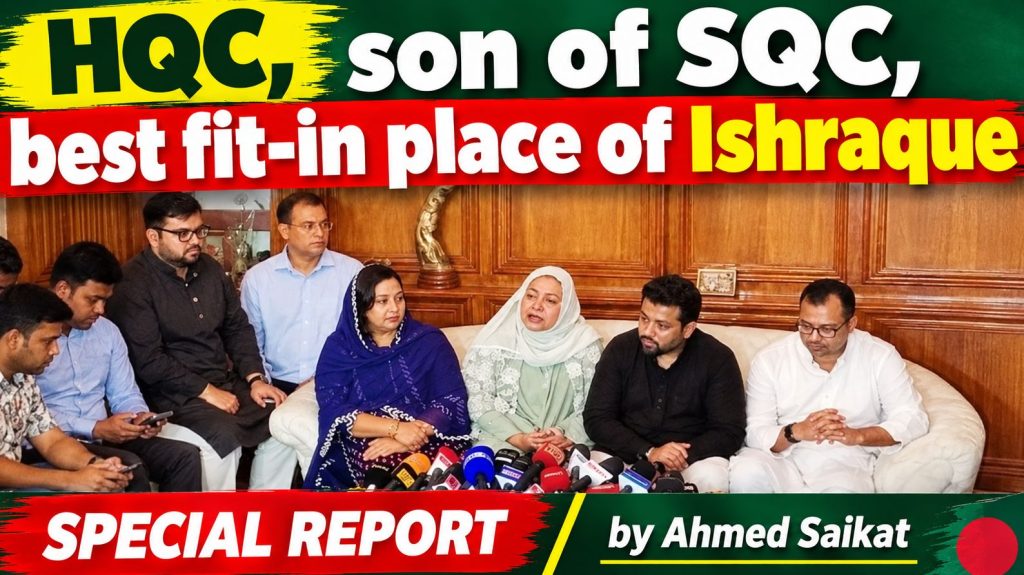
In 2013, Executive editor of daily Bangladesh first, a man of Cox’s Bazar had good time with Rangonia’s SQC, spend some of best times of life with Salahuddin Quader Chowdhury whom he used to call “Sassu” ( Uncle) and shared everything in Kashimpur-1 jail. Today, Ishraque has resigned as State minister of Liberation War affairs. It is extremely important that some one like Humman Quader Chowdhury can be best fit in this place.
The Ministry of Liberation War Affairs has initiated the establishment of a separate directorate for victims of enforced disappearance, torture, and other grave human rights violations, as well as their families. We welcome this government decision and view it as a significant step toward the rehabilitation of victims and their families, the establishment of their rights, and their formal recognition by the state.
In this context, we would like to put forward a specific expectation to the government: a directorate for victims—but not one that excludes them. The government could consider appointing an actual survivor of enforced disappearance to a key leadership or coordination role—such as Chief Coordinator, Director, or an equivalent position—within the proposed directorate. Furthermore, the representation of families whose loved ones were forcibly disappeared and never returned could also be institutionalized—a “victim-centered institutional reform proposal.”
This is because the experiences and needs of a survivor who has returned from enforced disappearance are distinct from the realities and requirements of families who have spent years waiting for a missing loved one. For a survivor, rehabilitation encompasses medical care, long-term physical and psychological recovery, the restoration of functional capacity, and social reintegration.
On the other hand, families of those who were forcibly disappeared and never returned face a different set of realities, including the search for their loved ones, the need for legal assistance, the pursuit of compensation, the navigation of social and financial crises, and the burden of prolonged uncertainty.
Therefore, ensuring representation for both groups could serve as a foundational pillar for an effective and humane directorate.
Why should an actual survivor of enforced disappearance be entrusted with a leadership role?
A victim of enforced disappearance is not merely a name in a government document, a case number, or a statistic. They are a human being who has endured horrific torture and state-sponsored persecution—someone whose family has also lived through long periods of uncertainty, terror, social pressure, and economic hardship. If an actual survivor of enforced disappearance, possessing the necessary qualifications and selected through a transparent process, holds a key position within this directorate, they would be able to:
★ Directly understand the real-world challenges and needs of the victims. ★ They will be able to build a relationship of trust with victims of enforced disappearance and their families;
★ They will be able to effectively articulate the practical needs of victims—such as medical care, rehabilitation, compensation, psychological support, legal aid, and social reintegration—to the government;
★ They will be able to serve as an effective bridge between ground-level realities and administrative decision-making;
★ They will be able to ensure the meaningful participation of victims in the formulation and implementation of government programs.
Similarly, the inclusion of a suitable representative from the families of those who were forcibly disappeared and never returned would ensure that their long-standing experiences, expectations, and challenges are directly reflected at the policy-making level. This would also convey a significant message from the government. Appointing an actual victim of enforced disappearance to a key position within a government institution would be more than just an administrative decision; it would serve as a powerful symbolic and practical manifestation of the government’s humanity, accountability, sensitivity toward victims, and political will. Through this, the state can send a clear message:
“To the state, a victim is not merely a relic of the past; the state seeks to restore them with dignity and integrate them as a partner within the national system.”
In particular, if an individual who was once a target of state oppression is subsequently entrusted with the responsibility of supporting others who have suffered similar fates, it would stand as a profound example of justice, rehabilitation, and the restoration of trust in the state.
This would also serve as visible proof of the government’s genuine intent.
In this context, the following proposals are submitted for the government’s consideration:
(1) Ensure the representation of actual victims and survivors of enforced disappearance within the organizational structure of the proposed directorate.
(2) Consider appointing an actual victim or survivor—based on their qualifications, experience, integrity, leadership qualities, and administrative capacity—to a key position, such as Chief Coordinator, Director, or an equivalent role of significant responsibility. (3) A suitable representative from the families of individuals who were subjected to enforced disappearance and never returned should be included in the department’s coordination framework, ensuring that the distinct needs and expectations of both categories of victims are appropriately reflected.
(4) To ensure a transparent and credible selection process, an independent screening committee could be tasked with evaluating candidates based on their victim status, experience, qualifications, competencies, and relevant professional background.
(5) Consideration could also be given to establishing a ‘Victim Advisory Council’—comprising victims of enforced disappearance, survivors, and representatives from the families of those who never returned—to contribute to the department’s policy formulation and program implementation.
Expected Outcomes:
The establishment of such a participatory framework would lead to:
★ Increased trust among victims toward government institutions;
★ More practical and victim-centered operations within the department;
★ Greater emphasis on the medical care, rehabilitation, and social reintegration of survivors;
★ Institutional recognition of the unique challenges and expectations faced by the families of those who were subjected to enforced disappearance and never returned;
★ A better alignment between government policy and the lived experiences of victims.
It can be concluded that Salahuddin Quader Chowdhury’s son Hummam Quader Chowdhury, a victim of notorious secret cell,can be best replaced in it as it is presumed by victims & all.
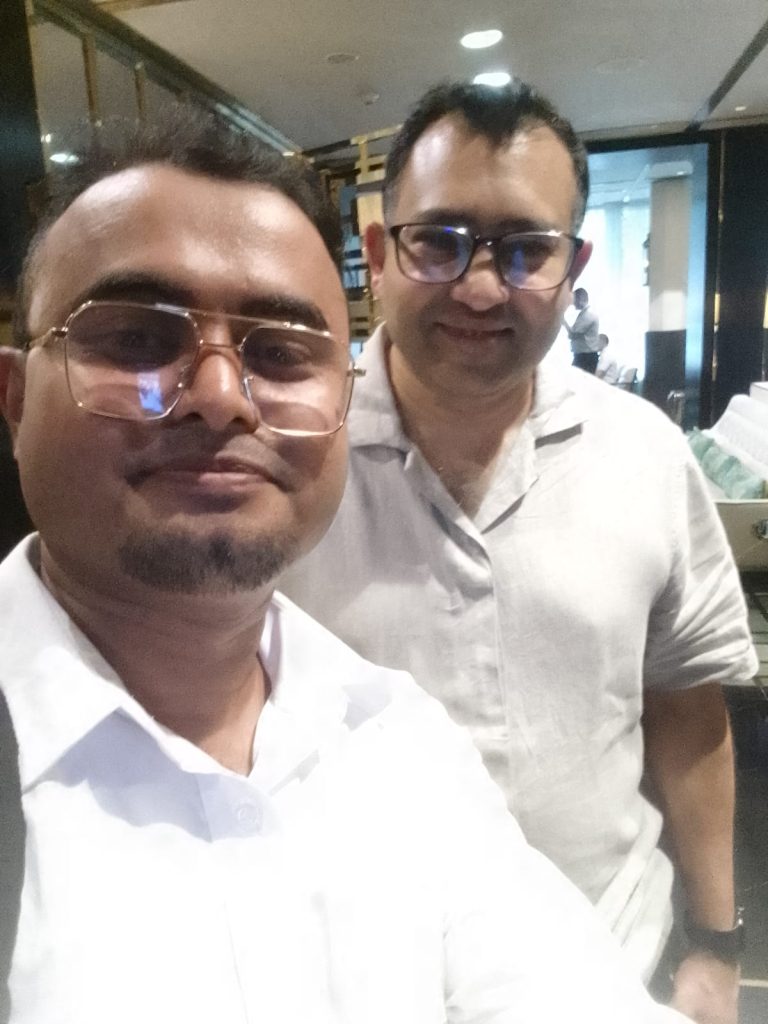
Ahmed Saikat, with Elder brother of Hummam Quader Chowdhury.