


Top 5 This Week

Related Posts

Tarique Rahman returns after a decade and a half of waiting- PM APS Atiqur Rahaman Rummon

In Bangladeshi politics, some names are not just individuals, they are documents of time, history of democratic struggle and symbols of hope and pain accumulated in the hearts of millions of people. Tarique Rahman is one such name. After 18 long years of waiting, longing, pride and expectation, the day of the man’s return to his homeland has finally approached. Tarique Rahman’s return to his homeland on December 25 is not just a personal or party event; it is an emotional, deeply meaningful chapter in the political history of Bangladesh. The news of the return of Tarique Rahman, the acting chairman of the Bangladesh Nationalist Party (BNP), who is staying in London, is causing a flood of joy among leaders and activists across the country. The leadership, who has been surrounded by movement, expectations and struggle for a long time, is finally returning to the country in person. The leaders and activists believe that through his return, the organizational strength of the BNP will be further consolidated and a new momentum will be created in the voting field of the 13th National Parliament election.


Tarique Rahman was born into a historic political family. His father, martyred President Ziaur Rahman, was the proclaimer of Bangladesh’s independence and the founder of BNP. His mother, nationalist Begum Khaleda Zia, was a three-time Prime Minister. But Tarique Rahman did not become a leader simply by inheritance; each step he took in politics was acquired through experience, struggle, and organizational skills.


Tarique Rahman’s formal political journey began in 1989 as a primary member of BNP. When BNP formed the government in 1991, he gained practical experience in running the state by his mother’s side. His organizational role behind BNP’s historic victory in the 2001 national elections was widely recognized in party and political circles. At that time, many said, ‘The shadow of martyr Ziaur Rahman is clear in Tarique Rahman.’ This rise eventually made him the main target of conspiracy. During the post-11 military-backed government of 2007, he was arrested in many controversial and politically questionable cases. Unspeakable inhuman torture was carried out in the name of remand. He almost reached the stage of paralysis due to serious injuries to his spine, ribs and knees. At the same time, his mother, Begum Khaleda Zia, and his younger brother Arafat Rahman Koko were arrested. Koko, who was not involved in politics, was arrested out of revenge. Later, the Zia family was deeply saddened by the untimely death of Coco due to the loneliness of exile.
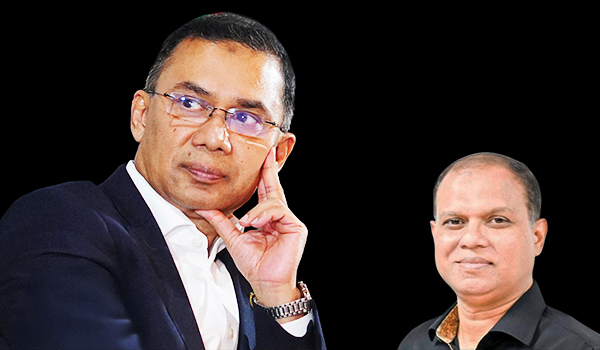

When Tarique Rahman was almost facing death due to long imprisonment and inhuman torture, he was sent to London in 2008 for better treatment on the orders of the court. But that journey was not just for treatment; it became the beginning of a long separation from his homeland. Leaving behind his beloved country, beloved mother, beloved younger brother, family-relatives, fellow fighters, leaders-workers and the love of millions of people, he had to go through a lonely exile. The 18 years that passed were filled with countless hardships, pain and uncertainty, which, although it was a nominal exile, was in reality a silent, ruthless exile. Tarique Rahman did not separate himself from politics even from outside the country. With the help of modern technology, he kept BNP united amidst various conspiracies through virtual meetings, video conferences and direct guidance. Tarique Rahman took on party responsibilities more firmly due to his mother’s illness. His leadership was decisive in the BNP’s movement, organization, and resistance against authoritarian rule from 2009 to 2024. According to political analysts, his far-sighted strategy and decisions also played an important role behind the 2024 mass uprising.
Outside of politics, Tarique Rahman is known as a humanitarian. He has been doing these things silently, providing medical and financial assistance to helpless people, taking responsibility for students’ education, standing by the families of martyrs and victims, providing food to hungry animals and medical care to injured animals. Humanitarian assistance through ‘We are the BNP family’ is an integral part of his politics. He has repeatedly said that politics is not just about power; the welfare of people is his main philosophy.


Recently, the current law and order situation in the country has also reached a deeply worrying level. On December 12, the day after the announcement of the schedule for the 13th National Parliament elections, Sharif Osman Bin Hadi, an independent candidate for Dhaka-8 constituency, was shot in the head in broad daylight in the capital Dhaka. Although he was taken to Singapore for better treatment, he could not be saved and died while undergoing treatment on December 18. On the same day, the body of Jannatara Rumi, joint coordinator of the NCP’s Dhaka Metropolitan South (Dhanmondi Police Station) Coordination Committee, was recovered from the Jigatola area of ​​Hazaribagh Police Station in the capital. Since the killing of Osman Hadi, the atmosphere of insecurity and panic has intensified across the country. According to intelligence agencies, there is an attempt to destabilize the law and order situation in the country focusing on the elections. It is alleged that leaders and workers of the defunct Awami League are active in this violent conspiracy. The horror of the situation does not stop here, intelligence information has revealed that the so-called ‘hit list’ includes the names of 50 to 60 political figures, which also includes leaders and activists of BNP, NCP and other political parties. This violence has spread to different parts of the country. On November 5, a terrorist attack was carried out on the election campaign of BNP nominated candidate for Chittagong-8 (Chandgaon-Boalkhali) constituency and metropolitan BNP convener Ershad Ullah in Bayezid Bostami police station area of ​​Chittagong city. In this, three people including Ershad Ullah were shot and the injured Sarwar Hossain Babla lost his life on the spot. On November 30, two people were shot dead in public in the Khulna court premises. On November 17, the incident of shooting dead a Jubo Dal leader inside a shop in Mirpur also shook the nation. These are not isolated incidents, but rather a reflection of a terrible trend.


The headline of ‘Bangladesh Today’ on July 15, 2025, states, ‘3554 murders, 4105 rapes, 819 kidnappings in 10 months.’ Again, a report by Somoy TV on October 15 said, ‘An average of 11 people have been killed every day in the last eight months.’ The country’s media is filled with such headlines today, which make it clear that the country is gradually being trapped in a terrible cycle of violence and insecurity. After the announcement of the election schedule, candidates were shot, political violence, mob justice, illegal weapons activity, and party and inter-party clashes; all of which have seriously jeopardized the security of high-profile leaders. Added to this is the fear of domestic and foreign conspiracies. The strategic interests of neighboring countries, the activity of internal opportunistic circles, and international networks have made Tarique Rahman’s return not only a political issue, but also a regional geopolitics issue.


Tarique Rahman is the political leader of BNP. At this moment, there is no one like him to lead the party. Therefore, the slightest blow to him means not only a loss for a party; it is also a deep threat to the democratic future of the country. In this reality, ensuring his maximum security is not a matter of leaving it to the goodwill of any party, it is an imperative demand of the time. Tarique Rahman, the beacon of public trust, is returning to his homeland on December 25, ignoring all fears and apprehensions. It is easy to imagine that the image of the capital surrounding his arrival will be unprecedented. An unforgettable stream of people will descend on the road from the airport to Gulshan – the highway will be filled with emotion, expectations and love. The sad reality is that this sea of ​​people can become the source of the biggest security risk for him. History has taught us that assassins look for opportunities in such a huge crowd. Therefore, no one can take responsibility for ensuring that no one will try to kill him in this crowd. The reality is harsh and ruthless: the risk to his life is serious and immediate. In this context, Tarique Rahman’s security is not a matter of formal arrangements or political courtesy; it is the highest responsibility of the state. He should not take a single step without strict security, intensive intelligence surveillance and preventive measures in the entire journey from the airport to his residence. At the same time, party leaders, workers and supporters should maintain their emotions and show the highest discipline. If unnecessary crowds gather on the streets in the name of expressing love, that love itself can become the biggest danger for him.


At this moment, a wrong decision, a slight negligence or the slightest laxity can lead to irreparable disaster. History has repeatedly warned us that the price of indifference on the issue of security is never forgivable. Therefore, the government, state machinery and all concerned parties must fulfill this important responsibility with the utmost sense of responsibility, restraint and professionalism so that Tarique Rahman’s return should only carry a message of joy and hope, and in no way write a chapter of grief and tears. If the expression of emotions exceeds the limits of discipline, then that emotion can become the biggest risk. There is no chance of denying this reality. Tarique Rahman’s return to his homeland after a century and a half of waiting will undoubtedly usher in new hope in Bangladeshi politics. This is not just a leader’s return home – it is an important juncture in history. At this time, there is no need for irresponsibility, but the utmost caution, restraint and full application of state wisdom. May Tarique Rahman’s return become a beacon of hope for the nation – this hope is the sole hope of the hearts of millions of people today.


Author: Senior Journalist, Convener, We Are BNP Family and Member, BNP Media Cell

LEAVE A REPLY

Please enter your comment!
Please enter your name here

Popular Articles