


Hasina’s rented intellectuals used to write story from as if they were just BAL and BAL, but this is not the true picture of us.
How a cultural roadmap can be made that is dignified and balanced for everyone in this country of many races, religions, and languages. Along with that, we will recommend the steps we should take for cultural development in the next five years.
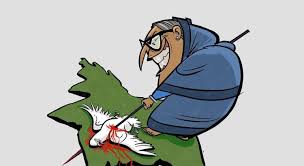
How the Cultural Narrative Paved the Way for Fascism : To make any country a colony, you first have to make it a cultural colony. This makes all the rest easier. The first step in making a country a cultural colony is to take over its history. That is, to arrange the story of history to suit the interests of the hegemonic master. Awami League and hegemonic intellectuals have been doing this for a long time. They have been writing history in such a way that when read, a particular force or group seems to be the central character of history. In their narrative, the Awami League cultural narrative seems almost as sacred and divine as religion. In doing this, they blatantly omit many important parts of history.
You will see, the discussion of the history of Awami League intellectuals in our country begins in 1952. As if our struggle for liberation as a political community began in 1952. As if we did not exist before, there was no history of exploitation against us. Therefore, there was no desire for liberation from exploitation.
Of course, the first step in our rebellion against the Pakistanis was through the use of fifty-two languages. We did not want to fall into another trap after leaving the zamindari and British colonies. Therefore, the language movement is important. But to show it as the starting point, it is difficult to erase the history of so many centuries of exploitation and my struggle in response to it.
This erasure process should not be considered accidental. Because through it, the first and original struggle of the people of this land is practically hidden – the struggle for their rights over agricultural land and crops. The oppression by the upper caste landlords is hidden, the heinous act of taxing beards is ignored, and the rebellions of the peasant subjects are made unimportant. Perhaps its main purpose was to create a perception that ‘the history of all our oppression is associated only with the Pakistanis’. Because our 54 years of politics are based on this perception. We certainly have a history of broken dreams with Pakistan. There is a history of economic-cultural inequality. There is a history of imposing many things on our culture. There is a history of not being able to enter the government despite winning the elections. There is a history of losing millions of lives in the freedom struggle. As we will remember that history, we also want to remember the history of hundreds of years of double colony. By double colony, I mean the British and the zamindari colony below it. So who wants to make us forget that history? Who wants to keep the image of a particular group clean? The answer to that is not to say it outright.
And besides, hegemonic intellectuals have not accepted everything since 1952. Awami League historians, writers, filmmakers and cultural activists have deliberately excluded Maulana Bhashani from history. Although Bhashani was a very important part of the democratic movement of Bangladesh from 1950 to 1971, he has been ignored and has not been made a part of our historical narrative in any medium of film or literature. A similar omission has occurred in the case of Ziaur Rahman. He was once presented as an ‘anti-liberation war’.
Let’s give some more examples, from which we can understand how one-sided our cultural products are. Cultural products are very important. Because it is through them that selected parts of history are embedded in the memory of all of us.
Why was General Osmani absent from the surrender ceremony on December 16, 1971? Have we made any film or novel in Bangladesh based on this simple but profound question? Even after Dr. Zafrullah Chowdhury openly spoke about the issue in his memoirs, has anyone wanted to work on this issue? Bangladesh fought for its liberation for 9 months, so why should the Pakistani army surrender only to the Indian army? Why should the head of the Bangladesh army, Osmani, be left out of that ceremony?
Has any significant work been done in art and literature on the atrocities of the Rakshi Bahini? How many of our renowned writers have brought the chaos and dictatorial rule of 1972 to 1975 into literature with any importance? Or the looting and famine of 1974?
A. K. Fazlul Huq saved the ancestors of people like you and me from the oppression of the landlord system. How much space has he been able to occupy in our literature, cinema or cultural practices?
Have you ever heard of a film about the forced disappearance of Ilyas Ali during the Awami League era?
The reason for avoiding these historical issues is the same. So that Sheikh Mujib, Awami League and the hegemonic cultural narrative can be portrayed as the heroes and positive forces of history. They are the ‘progressives’. And those outside of this are ‘reactionaries’!
Look at what happened as a result – despite giving birth to perhaps the most impactful event in the cultural world of Bangladesh, namely ‘new buds’, President Zia and the BNP are still labeled ‘culturally uncool’ or ‘reactionary’.
And on the other hand, despite the killing of thousands of opposition figures in 1972-75, the establishment of a one-party regime, hundreds of disappearances and murders after 2008, and the killing of hundreds of students and the public on July 24, the Awami League is ‘progressive’!
This ‘progress’, ‘reaction’ gives rise to the perception of high culture and low culture in society. This perception makes someone subhuman to you. This perception tells you who you will cry for and who you will not cry for. That is why your middle-class cultural mind did not cry when Ilyas Ali or Arman disappeared. Even though hundreds of BNP workers were killed, your mind did not cry. Because cultural perception has made them subhuman. So you don’t really care for them. This is how the Awami fascist government was able to retain state power despite 16 years of oppression.
If BNP and Jamaat had not been able to maintain an external distance from this movement on July 24, then this movement would have been ended by labelling it as Jamaat-Shibir.
So the question of culture is not a harmless subject at all. Let’s remember this.
This process of plundering history not only glorifies a particular historical and cultural perspective, but also produces boundless inferiority among that population.
You will see that very few people suffer from such inferiority complex about their language, their clothes, their philosophy, their religious identity, etc. as the people of Bangladesh do. If you go to Kerala, you will see them sitting comfortably in their traditional lungis at international events. And we are dying to find a place to hide our lungis. In terms of language – the cultural industry, which considers hegemonic culture almost divine, declared war on the use of our country’s colloquial language in television and cinema. However, they are defeated today.
Now let’s talk about Lalon. You will notice that despite being a philosopher like Lalon, we could not keep him at the center of our culture and philosophy. Although Kazi Nazrul’s political activities and writings make him the most relevant character in our freedom and political struggle, our left-influenced cultural arena has not accepted him as a symbol. Even after this Nazrul was one of the founders of the Communist Party. It is quite surprising. The main reason for our reluctance towards Lalon or Nazrul is that those who work with culture in our country used to look towards the gentry society of Kolkata, towards their validation. Are those whom Calcutta does not celebrate, worth celebrating?
All of these bear witness to our inferiority complex.
The question now is, will this status quo last forever? My answer is, no. Many see the 2024 mass uprising as just a political upheaval. In my view, it is also a cultural upheaval. Once a nation breaks out of a suffocating cage, it cannot be easily pushed back into that cage. As a result, this cultural question has begun to rise strongly in the public sphere.
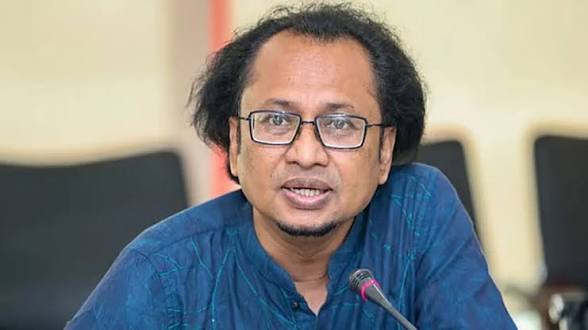
Part of this note is collected from the column by prominent cultural leader Mostafa sarowar Faruki who led the country towards a new cultural understanding during post- July revolution.