Statement by Ambassador M. Maroof Zaman, Survivor of Enforced Disappearance
On behalf Enforced Disappearance victims :
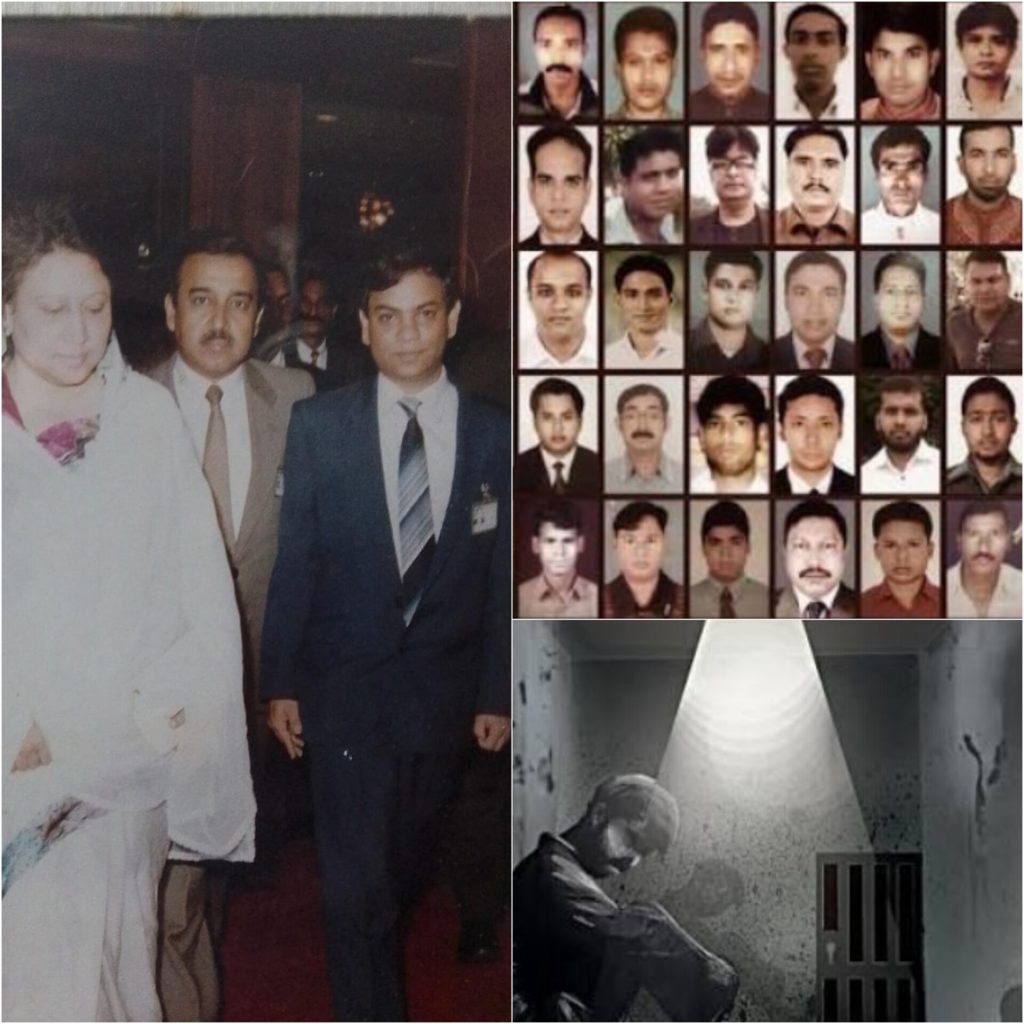
Commemorating the International Day of the Victims of Enforced Disappearances
Distinguished guests, Excellencies, colleagues, survivors, and families of victims,
We gather today to commemorate the International Day of the Victims of Enforced Disappearances, observed on 30 August, and to reaffirm our collective commitment to truth, justice, accountability, and the prevention of enforced disappearance.
This is not merely a day of remembrance. It is a solemn reminder that every disappeared person has a name, a family, and a right to know the truth—and that every State has an obligation to prevent this crime and hold those responsible accountable.
I stand before you not only as a former Bangladeshi diplomat, but as a survivor of enforced disappearance.
On 4 December 2017, I was abducted and held for nearly 16 months in a secret detention facility known as Ayna Ghar, where I was subjected to severe torture. I survived, but I continue to carry permanent physical and psychological consequences.
I therefore speak today not only from conviction, but from lived experience.
I pay my deepest respect to all those who were forcibly disappeared, extrajudicially killed, tortured, arbitrarily detained, or otherwise persecuted during the years of authoritarian rule in Bangladesh. We also remember those who lost their lives and those who were injured during the historic July–August 2024 mass uprising, which culminated on 5 August 2024.
For survivors and families, however, the struggle did not end with political change.
Our message is clear:
Impunity must end. Institutions must be reformed. And the State must never again be placed above the law.

My own experience illustrates why institutional accountability matters.
After refusing to comply with unlawful verbal instructions, I was forcibly retired and subsequently abducted by armed men operating vehicles associated with the Directorate General of Forces Intelligence. I was taken to AynaGhar inside Dhaka Cantonment.
There, I experienced physical abuse and torture and was held in conditions designed to break both body and mind.
I was finally released on 15 March 2019, following sustained advocacy by my daughters, international human-rights organizations’, foreign parliamentarians, and international media.
I survived. Many others did not return.
That is why enforced disappearance cannot be treated as an isolated violation. When institutions fail to investigate, preserve evidence, protect witnesses, and prosecute perpetrators, impunity becomes institutionalised.
Bangladesh has legislation prohibiting torture, including the Torture and Custodial Death (Prevention) Act, 2013. But legislation alone cannot protect citizens. Victims need independent investigations, effective prosecution, reparations, and strong institutional safeguards against recurrence.
This brings me to the central issue before us today: the independence of the National Human Rights Commission.
On behalf of United for Victims of Enforced Disappearances, UVED, and Voice of Enforced Disappeared Persons, VOED, I wish to express our grave concern regarding the draft National Human Rights Commission Act, 2026, approved by the Cabinet on 10 August 2026.
Our concern is fundamental:
Bangladesh must not replace one weak or government-dependent human rights institution with another.
The NHRC must be capable of investigating the State—not controlled by the State.
The Paris Principles require a national human rights institution to have a broad mandate, genuine independence, pluralism, and the capacity to investigate human rights violations effectively.
We are therefore particularly concerned about Section 19 of the proposed Act.
Where an allegation involves a law enforcement or security agency, the proposed mechanism appears to require the NHRC to obtain a report from the very agency accused of the violation.
This creates an inherent conflict of interest.
An agency accused of violating human rights should never be placed in a position where it can effectively investigate itself.
The NHRC must instead have its own independent investigative capacity, including access to detention facilities, official records, CCTV and digital evidence, forensic materials, and witnesses. It must be able to preserve evidence, summon officials, and conduct or commission investigations without interference from the agency under investigation.
We must learn from the failures of the past.
During the previous government’s prolonged rule, serious allegations of enforced disappearance, extrajudicial killing, torture, arbitrary detention, and suppression of dissent were repeatedly raised.
The lesson must be clear:

No government—whatever its political identity—should ever control the institution whose responsibility is to hold government accountable.
The National Human Rights Commission Ordinance, 2025, offered an important opportunity to strengthen the Commission and bring it closer to the Paris Principles. Although that ordinance subsequently lapsed because it was not presented to Parliament as a bill, its positive provisions should be preserved and strengthened in the new legislation.
Independence Begins with the Commissioners
The independence of the NHRC also depends upon who is appointed to serve as commissioners.
Under Section 7 of the proposed Act, we are concerned about the possibility of disproportionate government or political influence over the Selection Committee.
The appointment process must therefore be transparent, merit-based, pluralistic, and participatory. Government representatives may participate, but no government or political authority should be able to dominate the process.
And I wish to make one particularly important recommendation.
Survivors Must Have a Meaningful Voice
The new law should provide for the appointment of at least one qualified survivor of enforced disappearance—or, where appropriate, a suitably qualified representative of victims’ families—as a Commissioner of the NHRC.
This should not be token representation.
A survivor with the necessary professional qualifications, integrity, human rights experience, and commitment to justice can bring an indispensable perspective to the Commission.
Survivors know what it means to be abducted, detained incommunicado, tortured, denied legal protection, and then told that the state knows nothing about what happened.
Families know what it means to search for missing loved ones for years while living with uncertainty, institutional denial, and the absence of justice.
Their lived experience can help ensure that investigations, remedies, policies, and recommendations remain genuinely victim-centered.
Victims must not merely be subjects of human rights investigations. They should have a meaningful voice in the institution established to protect them.
Our Recommendations
Therefore, on behalf of UVED and VOED, we respectfully call upon the government and parliament to ensure that the new law:
First, it gives the NHRC full and independent authority to investigate violations by security and law enforcement agencies.
Second, it removes any mechanism through which an agency accused of a human-rights violation can effectively investigate itself.
Third, it guarantees the Commission immediate access to detention facilities, official records, CCTV and digital evidence, forensic materials, and other relevant information.
Fourth, it establishes a transparent, merit-based, and pluralistic appointment process, with meaningful participation of victims, survivors, women, civil society, and human rights experts.
Fifth, guarantees by law that at least one qualified survivor of enforced disappearance, or suitably qualified representative of victims’ families, is eligible for appointment as a commissioner.
Sixth, it provides the NHRC with genuine functional, financial, administrative, and investigative independence.
Seventh, it ensures effective protection for victims, complainants, witnesses, and human rights defenders.
And finally, it ensures that the entire Act is consistent with the Paris Principles and Bangladesh’s international human rights obligations.
Distinguished guests,
Bangladesh does not need a commission that merely receives complaints and issues recommendations. We need an institution capable of standing between the citizen and the abuse of state power.
The true test is simple:
Can the National Human Rights Commission independently investigate the government when the government itself is accused of violating human rights?
If the answer is no, the institution cannot be genuinely independent.
Governments may change. Political parties may change.
But the independence of the National Human Rights Commission must never depend upon who holds power.
On this International Day of the Victims of Enforced Disappearances, let us make a solemn commitment:
Never again should any person disappear into the custody of the State without the State being required to answer.
Never again should victims be silenced by institutional impunity.
And those who have survived the gravest violations must not remain outside the institutions created to prevent their recurrence.
Bangladesh needs a human rights commission that can hold every government accountable—not a commission controlled by any government.
Thank you.