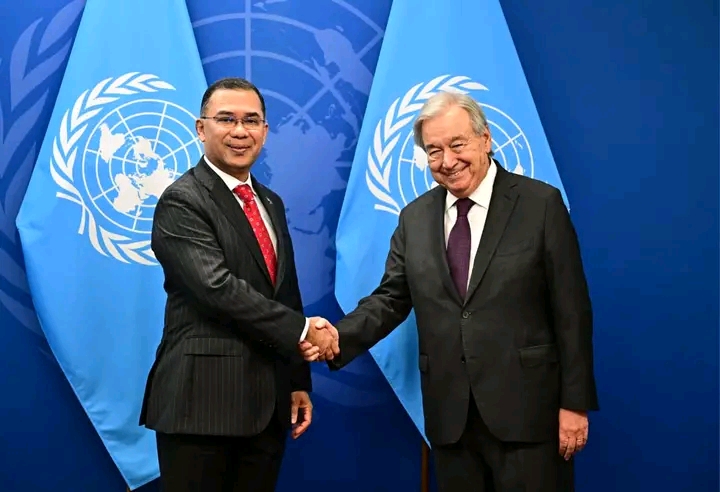
Ershad Nabil Khan, a prominent youth leader from Bangladesh has articulated on how things have shaped our International image after the Prime minister ship of Tarique Rahman at the United Nations .
In international geopolitics, one must always maintain a delicate balance. Here, the equation “two plus two equals four” does not always work most of the times ; the result could be seven, eleven, or even twenty-two.
The calculations of international politics are far from the simplicity of an arithmetic notebook. Equations here are shaped by a complex interplay of the balance of power, national interests, diplomacy, timing, and prevailing circumstances.
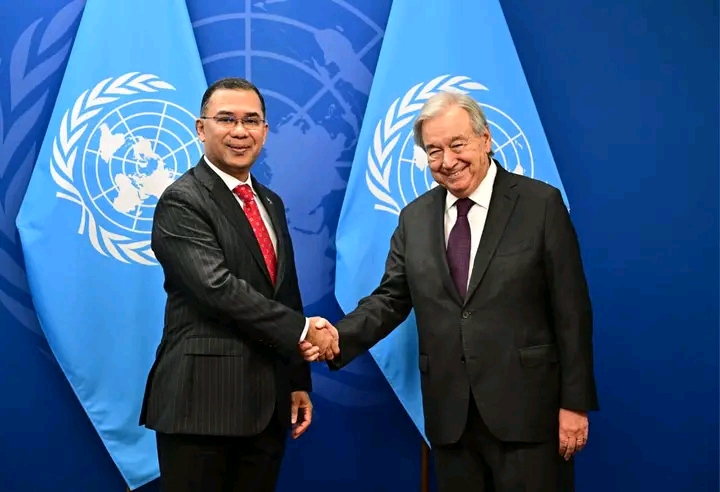
Since the Cold War era, our neighbor, India, has achieved a great deal in international politics, carving out a formidable position for itself in both regional and global arenas. However, as we enter the third decade of the twenty-first century, cracks have begun to appear in that long-standing influence. Whether India’s diplomatic grip on the international stage retains its former equilibrium is now a subject of debate.
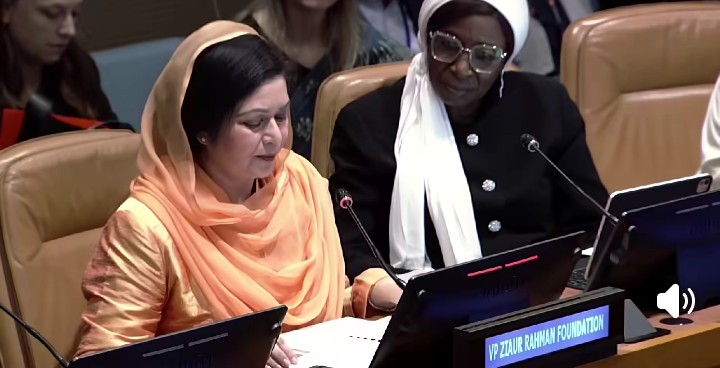
To grasp the current geopolitical reality, one needs only look at the proceedings of the 81st UN General Assembly. A particularly significant aspect of this session is that Bangladesh holds the presidency.
This means Bangladesh’s visibility and institutional role on the UN’s diplomatic stage in New York are undeniably crucial.
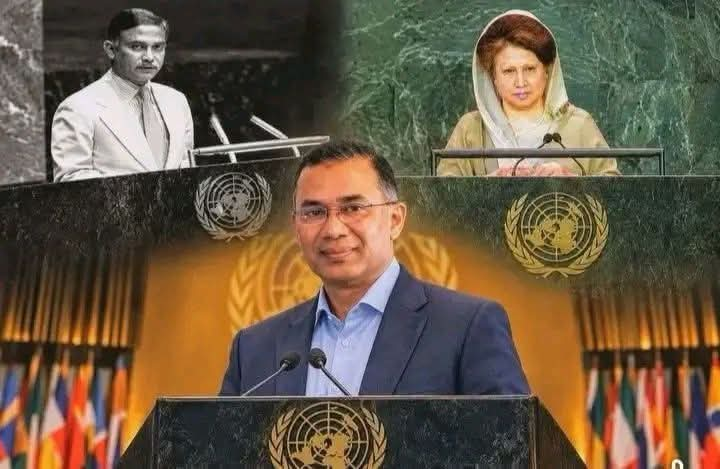
According to the UN, the responsibilities of the 81st session’s president include conducting plenary proceedings, leading discussions and consultative processes, and collaborating with member states. This reality cannot be underestimated.
The issue extends far beyond the mere presence or absence of a specific country. The pivotal question is: does the geopolitical equation of South Asia remain unchanged? To me, the answer is clearly no. The world has transformed. Centers of power have shifted. The nature of alliances has evolved. The language of diplomacy has changed.

Most importantly, a nation’s regional influence can no longer be measured solely by its military or economic might. A new geopolitical reality is emerging from a confluence of factors—international institutions, multilateral diplomacy, trade, investment, connectivity, maritime policy, climate action, security, and relations with the Global South.
Therefore, those who still attempt to interpret today’s world through the geopolitical lens of twenty years ago need to pause and reconsider. Furthermore, those in the Bangladeshi media who—under the guise of being ‘soft Awami Leaguers,’ ‘senior journalists,’ or ‘neutral members of civil society’—persist in trying to repackage the old Awami League into a new narrative on talk shows need to recognize that times have changed.
One thing must be clearly understood: politics cannot be grasped merely by analyzing it from a studio in Dhaka. One must observe geopolitics through the lens of New York, Washington, Beijing, Delhi, Moscow, the Middle East, and—of course—Dhaka.
Global power equations are shifting, and the dynamics of South Asia are changing as well; Bangladesh’s position is not exempt from this altered reality. Therefore, the time for clinging to outdated narratives has passed. The moment has arrived to comprehend the new reality and the emerging equations—to observe where a ‘New Bangladesh’ is carving out its place on the global map. And yes, for the information of those ‘senior journalists’: in Tarique Rahman’s Bangladesh, ‘Afa’, the fascist fallen, fled, BAL leader the Killer Hasina will not be returning.

The author Ershad Nabil Khan is a youth leader of Bangladesh nationalist party and is a consulting Editor of daily Bangladesh first.