There are moments in a nation’s history when foreign policy can no longer be treated as a matter for diplomats alone.
For Bangladesh, this may be one of those moments.
The newly signed Mecca Joint Defence Agreement between Saudi Arabia, Türkiye and Pakistan has opened the possibility of a new security architecture stretching from the Middle East into South Asia. Bangladesh has expressed interest in the arrangement and has said that the matter is being viewed positively.

And New Delhi is watching.
India’s Ministry of External Affairs has publicly acknowledged that it is closely following developments surrounding the pact and examining its implications for Indian national security, regional peace and stability.
That statement should not frighten Bangladesh. It should wake us up.
The question Bangladesh must ask is not whether India approves of our strategic choices. The question is whether Bangladesh is finally prepared to make those choices for itself.
We cannot choose our geography but we can choose our strategy
Bangladesh is surrounded by powerful neighbours and sits at one of the most strategically sensitive points of the Bay of Bengal.
Our western, northern and eastern borders are overwhelmingly surrounded by India, while Myanmar lies to our southeast. Our maritime position connects us to the Indian Ocean and the wider Indo-Pacific.
Geography is permanent.
Governments change.
Alliances change.
Strategic calculations change.
Therefore, Bangladesh must develop a foreign and defence policy capable of surviving political changes in neighbouring capitals. That does not mean treating India as an enemy.
It means refusing to become strategically dependent on any single neighbour.
India is watching and we should be watching too India’s response to Bangladesh’s possible participation in the Mecca Pact is revealing.
New Delhi has made clear that it is examining the agreement from the standpoint of its national security. Indian strategic commentary has also openly discussed the implications of Bangladesh potentially joining the Saudi-Pakistan-Türkiye arrangement.
That is India’s right. But Bangladesh has precisely the same right.
If India can assess how Bangladesh’s defence partnerships affect Indian security, Bangladesh can and must assess how Indian military capabilities, border policies and regional ambitions affect Bangladeshi security. This is not hostility. This is sovereignty.
The uncomfortable question of Islamophobia: There is another dimension that Bangladesh cannot simply ignore.
India is the world’s largest democracy and is home to millions of Muslims. Its people, culture and civilisation are far too diverse to be reduced to the policies of any one government.
But concerns over the political treatment of Muslims in India are real and have been documented by international human-rights organisations. Human Rights Watch, for example, has reported concerns over anti-Muslim rhetoric, discrimination and abuses involving security forces.
For Bangladesh, a Muslim-majority country sharing a long and complicated border with India, such developments naturally attract attention. But our response should never be communal.
Bangladesh must not define India as an enemy because India is predominantly Hindu, just as India must not view Bangladesh as a threat because Bangladesh is predominantly Muslim.
The problem is not religion.
The problem is state behaviour.
If policies, rhetoric or security practices create threats to Bangladeshi citizens or Bangladesh’s sovereignty, Dhaka must respond firmly regardless of which government is in power in New Delhi.
The border killings must end
There is one issue that should sit at the centre of every Bangladesh-India security dialogue:
Border killings.
For years, Bangladeshis have been killed along the India-Bangladesh border.
The killing of Felani Khatun in 2011 became an international symbol of the brutality and humiliation that can accompany border violence. Yet the problem has not disappeared.
Bangladeshi rights organisations and media have continued to document deaths and injuries involving India’s Border Security Force. In 2025, The Daily Star reported data from Ain o Salish Kendra showing 30 Bangladeshi deaths at the border in 2024 and 31 in 2023, while citing a decade-long estimate of more than 300 deaths.
This cannot become normal.
A border is supposed to separate two sovereign states.
It should not become a killing field.
Bangladesh should demand a verifiable zero-killing border policy, not merely another diplomatic assurance.
There should be:
● independent investigations into every fatal border incident;
● joint Bangladesh-India investigations where appropriate;
● accountability for unlawful use of lethal force;
● greater use of non-lethal weapons;
● functioning communication mechanisms between border forces;
● clearly demarcated areas and procedures for civilians;
● improved legal cross-border trade to reduce incentives for informal crossings;
● and regular ministerial-level reviews of border incidents.
Security is legitimate.
Extrajudicial killing is not.
So how does Bangladesh secure its borders?
The answer is not to build a bigger wall and hope for the best.
Bangladesh needs a smart-border strategy.
We need better surveillance, integrated border management, thermal imaging, drones, ground sensors, secure communications, rapid-response units and stronger intelligence-sharing.
We need to know what is happening along our borders before an incident occurs.
And we need a professional border-security doctrine that protects Bangladeshi territory without unnecessarily escalating tensions.
A secure border should not require permanent hostility.
But how do we build bridges when others are burning them?
This may be the most important question of all.
The answer is: we build stronger bridges and stronger foundations.
Bangladesh should never abandon dialogue with India.
Our two countries share history, rivers, culture, trade routes, family ties, energy connections and an enormous geographical reality.
India will remain Bangladesh’s neighbour regardless of who governs either country.
Therefore, burning the bridge would be foolish.
But building a bridge does not mean allowing someone else to control the road.
Bangladesh needs engagement without submission.
Cooperation without dependency.
Friendship without fear.
And diplomacy without surrender.
The Mecca Pact could give Bangladesh strategic depth
Islamic Unity Is Not a Threat
The Mecca Defence Pact should also be understood within the broader context of Islamic unity and collective responsibility among Muslim-majority nations.
There is nothing inherently inappropriate about Muslim countries strengthening cooperation over matters concerning their own security, sovereignty and collective interests; other regions and groupings routinely pursue similar arrangements based on shared geography, history, economic interests or strategic priorities.
Such cooperation should not be interpreted as hostility towards any particular religion, nation or people. Rather, it can be viewed as an effort to foster unity, mutual support and strategic self-reliance within the Muslim world, while respecting the sovereignty of every participating state and maintaining peaceful relations with the wider international community.
This is where the Mecca Pact becomes potentially important.
Saudi Arabia offers enormous economic and diplomatic weight. Türkiye possesses an increasingly sophisticated defence industry. Pakistan possesses significant military capabilities, nuclear weapons and extensive experience in South Asian security.
For Bangladesh, participation could potentially provide opportunities for defence cooperation, military training, intelligence-sharing, technology transfer, joint exercises and the development of domestic defence capabilities.
But Dhaka must negotiate from a position of Bangladesh First. We should not join an alliance simply to oppose India.
And we should not join an alliance simply because its members are Muslim-majority countries.
We should join only if it demonstrably strengthens Bangladesh’s national security, economy and sovereignty.
We must not exchange one dependency for another
This is crucial. Bangladesh should not move from excessive dependence on one power to excessive dependence on another. We need a genuinely multi-aligned foreign policy.
Maintain constructive relations with India.
Deepen strategic cooperation with Türkiye and Saudi Arabia.
Maintain our economic and defence relationships with China.
Strengthen relations with Japan, the United States and Europe.
Expand engagement with ASEAN.
Revitalise regional platforms such as BIMSTEC.
And maintain our own independent voice.
The objective should be simple:
Everyone should want Bangladesh as a partner, but nobody should be able to treat Bangladesh as a subordinate.
India’s concern should become Bangladesh’s opportunity
If New Delhi is genuinely concerned that Bangladesh joining the Mecca Pact could alter the strategic balance in the region, Bangladesh should not respond with panic or provocation.
We should respond with diplomacy.
Tell India clearly:
We are not joining an alliance against you.
We are strengthening an alliance for ourselves.
We want peaceful borders.
We want trade.
We want river cooperation.
We want connectivity.
We want security.
But we also want dignity, equality and respect for our sovereignty.
That is a reasonable position for any independent state.
Bangladesh should stop thinking defensively
For decades, our national-security discussion has often been reactive.
Something happens at the border.
Something happens in the Bay of Bengal.
A neighbour makes a statement.
A foreign power changes policy.
Then Dhaka responds.
We need to reverse that model.
Bangladesh should develop a 20-year national-security strategy covering:
land borders, maritime security, air defence, cyber warfare, intelligence, defence manufacturing, energy security, food security and strategic diplomacy.
And this strategy should survive changes of government.
National security cannot be a five-year political project.
The real battle is for strategic independence
The Mecca Pact may become a powerful security arrangement or it may remain a relatively limited framework.
It is too early to know.
But Bangladesh’s willingness to consider joining it has already changed the strategic conversation.
India is watching.
Pakistan is watching.
Türkiye is watching.
Saudi Arabia is watching.
China is watching.
The United States is watching.
And Bangladesh must watch too.
But we should not watch with fear.
We should watch with confidence.
Our objective should not be to create enemies.
Our objective should be to ensure that nobody can create an enemy of Bangladesh without consequence.
We should build bridges with India even when relations are difficult.
We should demand an end to border killings even while pursuing friendship.
We should cooperate economically while protecting our sovereignty.
We should develop military strength without becoming militaristic.
And we should diversify our alliances without becoming anyone’s proxy.
Because in the dangerous neighbourhood of the 21st century, peace does not belong exclusively to the strongest.
It belongs to those who are prepared.
Bangladesh does not need to choose between friendship and strength.
We need both.
We can extend our hand to our neighbours while keeping our borders secure.
We can pursue dialogue while developing deterrence.
We can build bridges while ensuring that nobody can burn the foundations beneath them.
And if the Mecca Defence Pact can help Bangladesh achieve that balance without compromising our independence, dragging us into unrelated conflicts or turning our foreign policy into an anti-India crusade, then Dhaka should seriously consider taking its place at the table.
Not because Bangladesh wants war.
But because a nation that wants peace must have the strength to protect it.
Bangladesh must not become anyone’s enemy.
But neither should Bangladesh ever again be anyone’s easy target.
The Questions Bangladesh Must Ask Before It Joins: Ultimately, the question is not simply whether Bangladesh should join the Mecca Defence Pact. The real question is: what exactly will membership mean when Bangladesh is the country under attack?
If an aggressor crosses our border, attacks our territory, threatens our sovereignty or strikes our people, will Türkiye come to our assistance? Will Pakistan stand beside us? Will Saudi Arabia use its immense diplomatic and economic influence to defend Bangladesh? Or will the promise of collective defence remain a powerful phrase on paper?
The existing agreement declares that an armed attack against one member is to be regarded as an attack against all. But Bangladesh should not enter such an arrangement on the basis of assumptions. Before signing, Dhaka must ask for mechanisms, commitments, timelines and guarantees. Who responds? How quickly? With what capabilities? Under whose command? And what happens when the attacker is a country with which one of the alliance members has important economic or diplomatic interests?
Then there is the economic question.
Can Saudi Arabia become not merely Bangladesh’s security partner, but its economic partner? Can Riyadh help Bangladesh attract investment, strengthen energy security, expand infrastructure, create employment and open new markets? Can Saudi capital help Bangladesh move beyond dependence on low-cost manufacturing towards a more diversified, technologically capable economy?
And what about Pakistan?
Can the country that once stood on the opposite side of our most painful chapter in history genuinely help reshape the relationship between Dhaka and Islamabad? Can the wounds of 1971 remain remembered without permanently imprisoning future generations? Can Pakistan acknowledge history while Bangladesh and Pakistan build a relationship based on mutual respect, equality, economic cooperation and a new sense of brotherhood?
And then there is Türkiye.
Can Ankara become more than a diplomatic friend and defence supplier? Can Türkiye help Bangladesh develop a modern indigenous defence industry, transfer technology, strengthen our naval and air capabilities and help us become less dependent on imported military hardware?
Can Türkiye help Bangladesh pursue its own Kızıl Elma, not literally Turkey’s national vision, but Bangladesh’s equivalent aspiration to reach beyond its present limitations and become technologically, economically and strategically self-reliant?
These are not sentimental questions.
They are Bangladeshi national-interest questions.
If the answer to these questions is yes, then the Mecca Pact could represent something far greater than another international agreement. It could become the beginning of a new strategic chapter in which Bangladesh acquires friends, partners, economic opportunities, defence capabilities and most importantly, strategic depth.
But Bangladesh must never exchange one dependency for another.
We should join only with our eyes open, our conditions clearly negotiated and our national interests firmly protected.
We should continue building bridges with India even when India makes those bridges difficult to cross. We should demand an end to border killings. We should secure our frontiers. We should protect the Bay of Bengal. We should strengthen our armed forces and intelligence capabilities. And we should maintain constructive relationships with China, the United States, Japan, Europe and ASEAN alongside our relationships with Saudi Arabia, Türkiye and Pakistan.
Bangladesh does not need to choose between friendship and strength. It needs the strength to make its friendships meaningful.
So perhaps the final question is not whether Türkiye, Pakistan and Saudi Arabia will come to Bangladesh’s rescue.
The question Bangladesh should put to them before joining is much more direct:
“If we stand with you when you need us, will you stand with Bangladesh when Bangladesh needs you?”
If the answer is unequivocally yes, then perhaps Bangladesh has finally found the strategic partnership it has been searching for.
If the answer is “it depends,” then Dhaka must negotiate harder.
And if there is no clear answer at all, Bangladesh should think twice before signing.
Because alliances are not measured when everyone is at peace.
They are measured when one member is bleeding.
In the end, Bangladesh must choose the path of strength, sovereignty and strategic preparedness because only a nation capable of defending itself can truly preserve its peace:
Ya devlet başa, ya kuzgun leşe.
Translation: Either the state prevails, or the ravens feast upon the fallen.
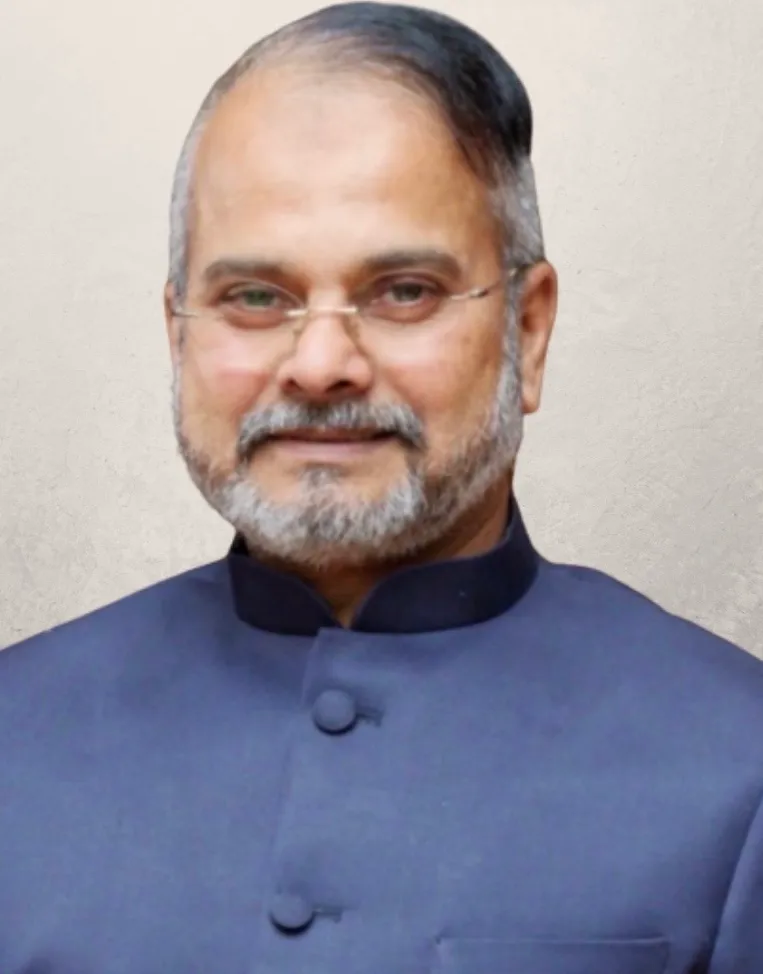
Salahin Kadir is a Bangladeshi broadcast journalist, news presenter and educator with extensive professional experience spanning journalism, television broadcasting and English-medium education. He currently serves as Bureau Chief (News Bureau Chief – South Asia) at CSB News USA LLC and is also an English News Presenter at ATN News, where he presents the English news bulletin. Previously, he worked as Senior News Correspondent at CSB News USA (Bangladesh Stream) and presented English news on Bangladesh Television (BTV) for nearly two years, covering both the pre- and post-COVID period.
Alongside his broadcasting career, Salahin Kadir has more than a decade of experience in English-medium education, having taught in leading English-medium institutions and contributed to the professional development of teachers through his involvement with the English Medium Teachers’ Committee. His combined experience in journalism, broadcasting and education has given him a distinctive perspective on Bangladesh’s social, political and contemporary affairs.